

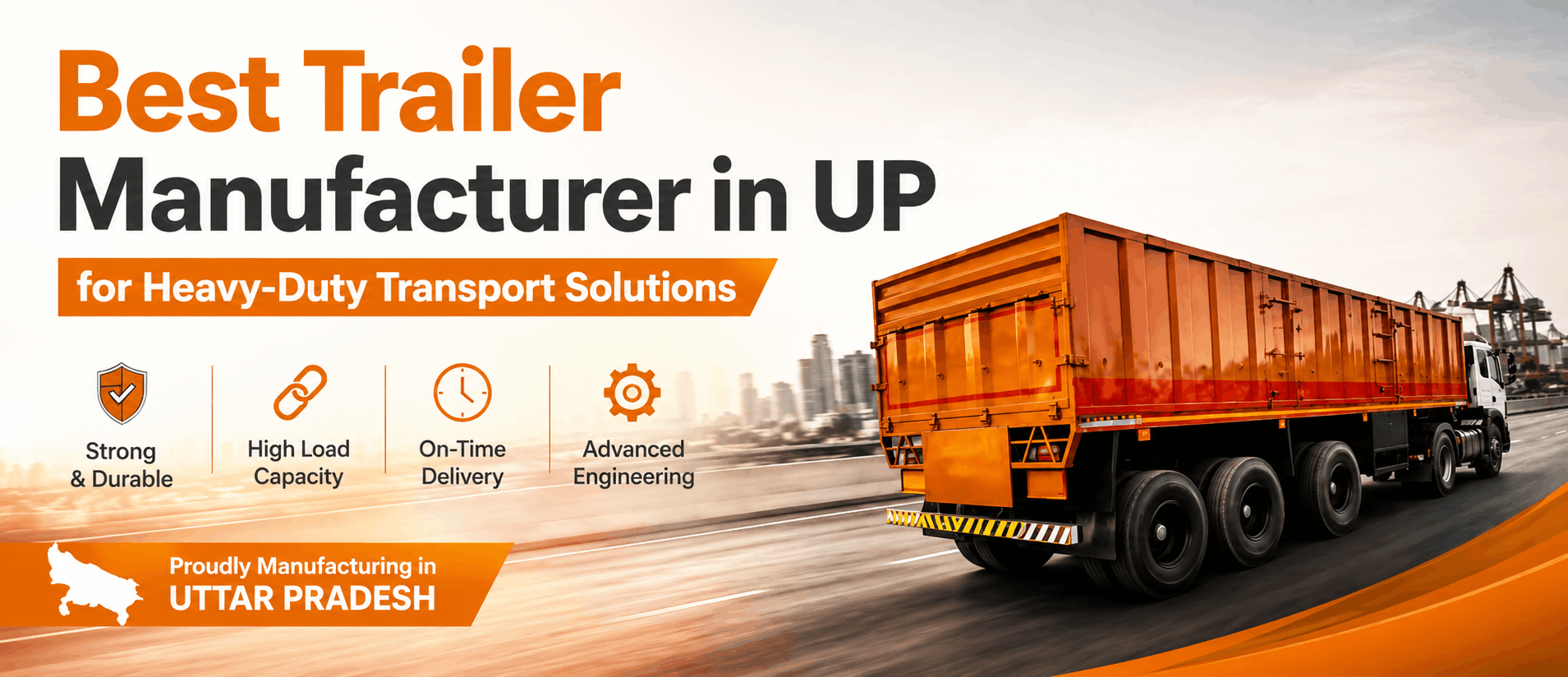
Uttar Pradesh has quietly become one of the busiest logistics corridors in the country. Between the industrial belts around Kanpur, the mining and construction activity in Bundelkhand, and
the sheer volume of goods moving through the state every day, transport businesses here need equipment that simply doesn’t quit. That’s exactly why finding the right trailer manufacturer in UP matters more than most business owners realise until something breaks down on a highway at 2 AM.
If you’ve been searching for a heavy-duty trailer manufacturer in Uttar Pradesh, chances are you’ve already run into the same problem everyone does: a lot of options, not a lot of clarity. This article breaks down what actually separates a good trailer manufacturer from an average one, and why Passion Trailers has become a name that transport operators across UP keep coming back to.
Why Location Actually Matters When Choosing a Trailer Manufacturer
It’s tempting to think a trailer is a trailer, no matter where it’s built. In practice, that’s not quite true. A manufacturer based in and around UP understands the specific pressures the state’s road network puts on a vehicle — the potholes on state highways, the load patterns coming out of industrial zones, the weather swings between the plains and the hills nearby. That local understanding shapes everything from the steel grade used to the suspension setup.
Passion Trailers is headquartered at Plot No. 23-24, Industrial Area Site-1, Raniya, Kanpur, which puts the manufacturing plant right in the middle of one of UP’s most active trade zones. This isn’t just a convenient addres
s. It means faster turnaround on custom orders, quicker access to after-sales support, and a manufacturing team that has literally watched these trailers perform on the roads they were built for.
For businesses running fleets across our flatbed trailer, container, and low bed trailer categories, that regional proximity often translates into fewer delays and a partner who actually picks up the phone when something needs attention.
What “Heavy-Duty” Should Actually Mean
The term “heavy-duty” gets used loosely in this industry, so it’s worth being specific about what it should include.
Higher-grade steel construction: A trailer built with premium steel carries more payload without adding unnecessary dead weight, which directly affects fuel efficiency and tyre life over the vehicle’s lifespan.
Braking systems suited for load variation: Trailers that adjust braking pressure between loaded and unloaded conditions perform more reliably and put less strain on components over time, something that matters enormously on UP’s mixed terrain of highways and rougher rural stretches.
Reinforced safety structures: Side and rear under-run guards built to CMVR standards aren’t optional extras; they’re what keeps two-wheelers and pedestrians safe around a loaded trailer, and they’re a legal requirement that shouldn’t be treated as an afterthought by any manufacturer.
Corrosion resistance: Surfaces that go through proper shot-blasting and painting processes, tested against salt-spray corrosion standards, simply last longer — especially relevant given UP’s humidity swings across seasons.
A trailer that checks all of these boxes isn’t cheap to build, which is exactly why the manufacturer you choose has such a direct impact on your total cost of ownership over the next several years.
The Trailer Types Every Serious Operator Should Know
Different cargo, different terrain, and different business models call for different trailer configurations.
Flatbed Trailers are the workhorse of construction and heavy machinery transport, an open, level bed with no roof or sides, ideal for oversized or irregularly shaped loads that don’t need weather protection.
Container Trailers are built for long-distance logistics, designed to securely carry standard shipping containers between ports, depots, and warehouses with minimal handling.
Low Bed Trailers sit closer to the ground and are the go-to choice for transporting tall, heavy industrial equipment where height clearance is a concern.
Side Wall Trailers add protective panels around the cargo bed, useful for goods that need some shielding from weather or road debris without the full enclosure of a container.
Skeletal Trailers are a lighter-frame option built specifically to handle containers with maximum durability and minimal unnecessary weight.
Choosing between these isn’t just about what you’re hauling today, it’s about matching the trailer to your business model. A construction contractor moving equipment between sites has very different needs than a logistics company running fixed routes between cities, and a manufacturer worth working with should be asking about your actual operations before recommending a configuration.
Industries That Rely on the Right Trailer Partner
Heavy-duty trailers aren’t a one-industry product, and the manufacturers who understand this tend to build more versatile product lines. In UP specifically, demand tends to cluster around a few sectors.
Construction and infrastructure projects need flatbed and low bed trailers that can handle repeated loading of heavy machinery without structural fatigue setting in early.
Mining operations put trailers through some of the harshest working conditions imaginable — constant vibration, abrasive material, and non-stop usage cycles which makes build quality non-negotiable.
FMCG and agriculture businesses often need a mix of container and side wall trailers depending on whether goods need weather protection during transit.
Metal and industrial goods transport typically leans on flatbed and container configurations built to handle concentrated point loads without warping.
A manufacturer that actively serves all of these sectors rather than specialising narrowly usually has broader engineering experience to draw from, which shows up in better-designed trailers across the board.
Why After-Sales Support Changes the Real Cost of a Trailer
Here’s something that doesn’t get discussed enough: the purchase price of a trailer is only part of the story. What happens six months later, when a component needs servicing or a part needs replacing, is where a lot of transport businesses either save money or lose it.
A manufacturer with a genuine service network not just a sales team makes a measurable difference here. Passion Trailers maintains service support across India with round-the-clock availability, which matters enormously when a breakdown happens mid-route and every hour of downtime costs money. This is also where being based in UP, with direct access to the manufacturing plant, tends to shorten response times compared to working with an out-of-state supplier.
What to Actually Ask Before Choosing a Manufacturer
If you’re evaluating best trailer manufacturers in UP, a few questions tend to separate the serious operators from the rest. What steel grade and thickness are used in the frame, and is that documented? Is the braking system designed to adjust for loaded versus unloaded conditions? Does the manufacturer offer customisation for your specific industry — agriculture, construction, FMCG, or mining? What does the after-sales service network actually look like, and how quickly can they respond? Can they show quality certifications or testing standards they build to?
Any manufacturer confident in their build quality should be able to answer these without hesitation.
Where Passion Trailers Fits Into This
Passion Trailers has built its reputation in Uttar Pradesh around exactly the standards outlined above high-strength steel, WABCO braking systems, CMVR-compliant safety structures, and a manufacturing process backed by extensive quality testing before any unit ships out. Every trailer, whether it’s a flatbed, container, low bed, side wall, or skeletal configuration, goes through the same rigorous checks before it reaches a customer.
Being part of the wider Passion Group, which has spent over two decades building a reputation for quality and reliability, the company brings a level of institutional experience that newer manufacturers simply haven’t had time to develop yet. That combination of established trust and hands-on manufacturing focus is a big part of why transport operators across UP keep choosing Passion Trailers over newer or less established names.
If your business is currently weighing options for a heavy-duty trailer manufacturer in UP, it’s worth taking a closer look at our company background, or browsing the full product range to see which configuration fits your operations best.
Getting the Right Trailer for Your Business
Choosing a trailer manufacturer isn’t a decision to rush, but it also doesn’t need to be complicated once you know what to look for: build quality, safety compliance, industry-specific customisation, and a service network that actually shows up when you need it.
For businesses operating in or around Uttar Pradesh, having a manufacturer based locally one that understands the roads, the climate, and the working conditions firsthand often makes the difference between a trailer that lasts and one that becomes a recurring expense.